
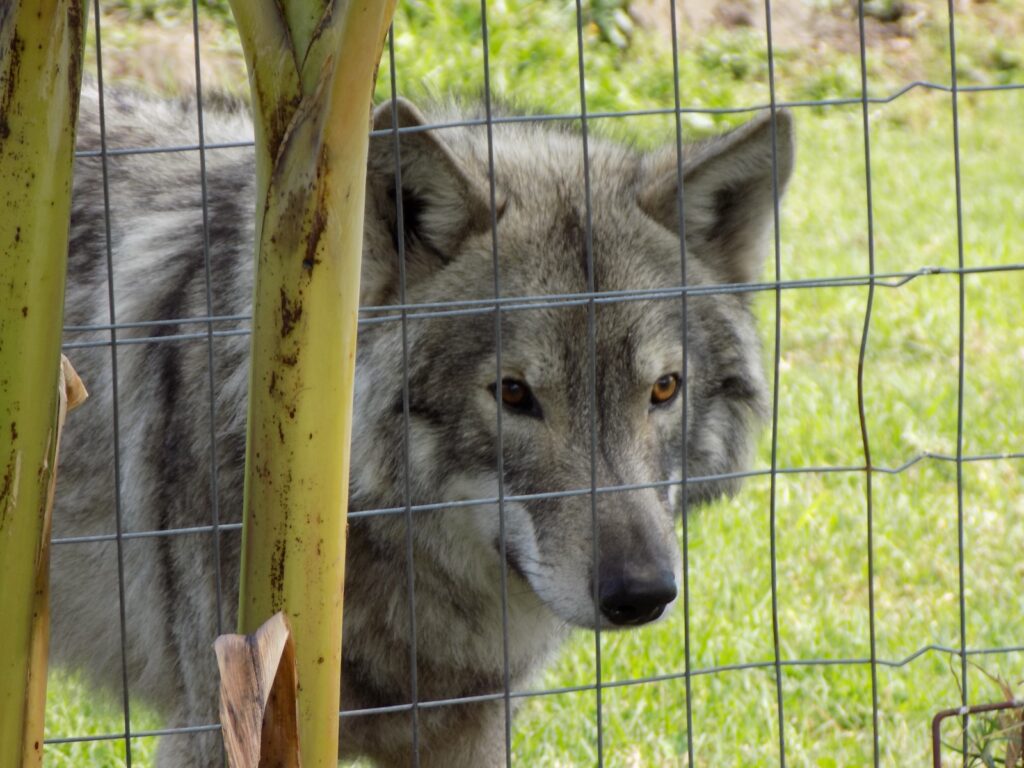
In May 2026, more than 300 mm of rain fell across the Tsitsikamma area in a single weekend. Roads turned to mud, drainage systems strained, and every fence line had to be checked. Through it all, the wolves at the Tsitsikamma Wolf Sanctuary remained safe.
What 300mm in a Weekend Does
To put that figure in perspective, many parts of the country do not see 300 mm of rain across several months. Weather on this scale tests every fence line, drainage channel and access road on the property. Water finds the weak points, solid ground turns to mud, and routes we use every day to reach the enclosures and carry feed can wash out within hours. Our first job through any storm is always the same: check that every wolf is safe, then deal with the damage once conditions allow.
The wolves themselves handle heavy rain far better than the infrastructure does. Grey wolves evolved in cold northern climates and carry thick, weather-resistant coats, so a wet, cold weekend is well within what they are built for. The greater risk during a storm is to the fences and enclosures that keep them secure, which is why checking and repairing those barriers is the priority the moment it is safe to do so.
A Self-Funded Sanctuary, Off the Grid
The sanctuary sits off the grid, some distance from the nearest town, and that shapes how a storm plays out. When roads turn to mud and services are affected, help is not around the corner, so the team works with what is on hand until conditions ease. All of the repair work falls to us alone. As an exotic species in South Africa, wolves receive no government support, which means the sanctuary is self-funded through donations, sponsorships and daily tours. When a storm damages a fence or a road, there is no emergency fund elsewhere to draw on.
Preparation Is Part of the Care
Severe weather does not need to happen often to place real strain on a small sanctuary. Each major storm adds to the maintenance work carried through the rest of the year, which makes preparation part of responsible animal care.
The rain does pass. The damage gets assessed, the repairs get made, and the daily routine of feeding, cleaning and caring for the pack picks back up. We keep going because the wolves depend on us to, and because the people who support this place make it possible to absorb a hard weekend and carry on.
How You Can Help Us Stay Storm-Ready
If you have ever wondered what a donation to a wolf sanctuary actually pays for, weekends like this are a large part of the answer. It goes toward emergency fence and enclosure repairs, drainage and road maintenance, and keeping the pack fed and secure whatever the Eastern Cape weather delivers. If you would like to help us stay ready for the next storm, you can donate to the sanctuary, or come and meet the pack in person on a guided tour.