
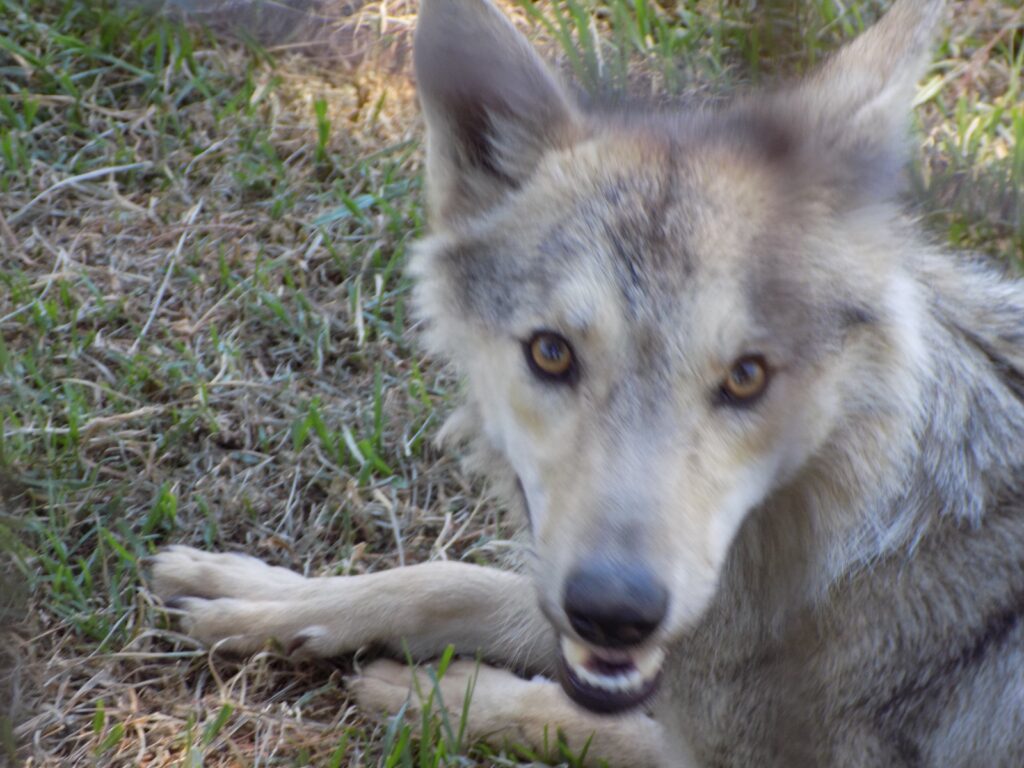
Feeding a wolf pack is heavy, physical work. It requires a reliable supply of meat, substantial freezer space, safe handling, careful portioning and a plan for the weeks when donations run low. Most visitors never see this side of sanctuary life, but it is one of the largest and most constant demands the Tsitsikamma Wolf Sanctuary carries.
How Wolves Eat
Wolves are built to eat in a pattern often described as feast and famine. In the wild they may go without a meal for some time, then eat a large amount in a single sitting when the pack makes a kill. They are true carnivores that do best on whole meat, including bone and organ, rather than muscle alone, which is part of why donated carcasses are so valuable to us. It also means the handling is considerable. Meat has to be kept frozen, portioned safely and managed so nothing spoils, all before a single wolf is fed.
Where the Meat Comes From
We rely heavily on donated meat, and we are grateful for every contribution. Recently we received three whole donated cows. That sounds like an enormous amount of food, and it is, but with our freezer storage already at capacity we could not keep all of it. Rather than let anything go to waste, the team cut the carcasses into manageable sections, kept what we had room to store, and arranged for another predator facility to collect the rest. By sharing surplus with other wildlife facilities instead of letting it spoil, we help care for more animals than our own pack alone, and those facilities return the favour when we are the ones short on space or supply.
Because we depend on donations, supply is never perfectly predictable. Some weeks bring more than we can store, as the three cows did. Others bring very little, and the team has to plan carefully so the pack is never short. Managing that unevenness is a constant background task that visitors rarely picture when they think of a sanctuary.
Managing Waste Responsibly
Feed preparation also creates organic waste that must be managed safely. Strict handling, cleaning and disposal procedures protect the wolves, the team and the surrounding environment.
Every Donation Is Put to Work
Feeding predators at this scale is relentless, and it is one of the single largest ongoing costs the sanctuary carries. The full financial picture of keeping a pack fed and cared for is significant, and it is something we will look at in more detail in a future post. For now, the short version is that every donation, whether it arrives as cash, as meat, or as a few hours of a volunteer’s time, goes directly into keeping the pack fed and healthy. If you would like to be part of making days like this possible, you can support the sanctuary directly, or learn more about who we are and why we do this work.