
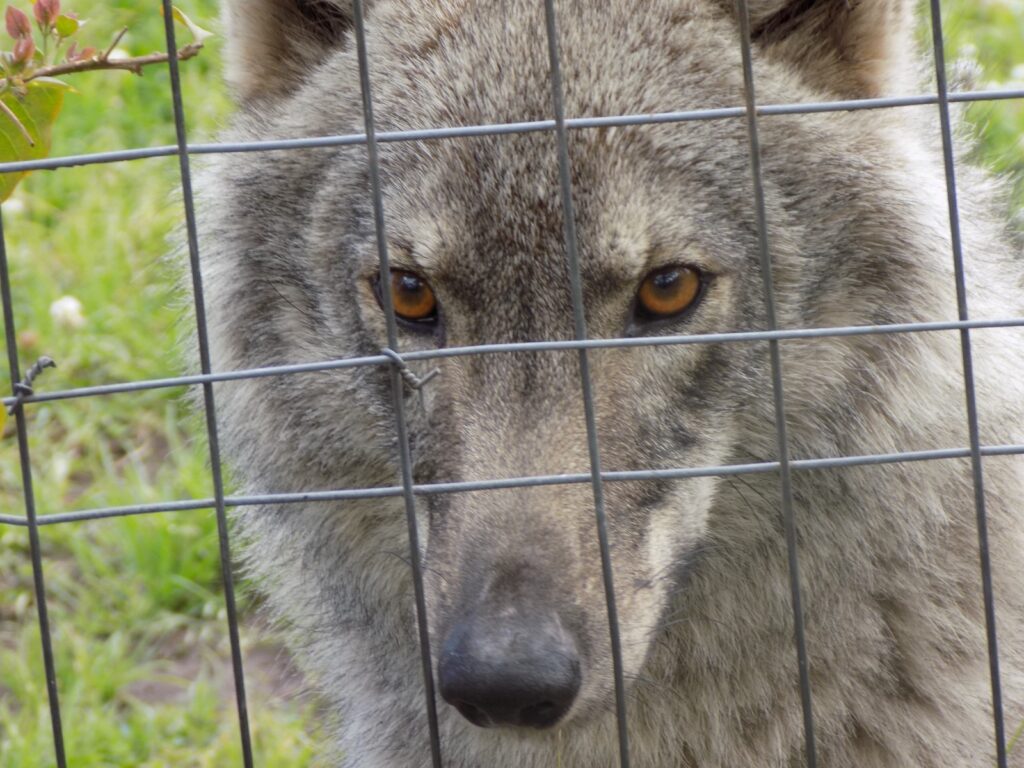
A wolf-dog can look like the best of both worlds: the loyalty of a dog with the wild beauty of a wolf. The reality is far more complicated, and it is one of the main reasons a place like the Tsitsikamma Wolf Sanctuary needs to exist at all.
What a Wolf-Dog Actually Is
A wolf-dog, or wolf-dog hybrid, is a cross between a domestic dog and a wolf. How much wolf an individual carries varies enormously, and animals with a high wolf content behave very differently from a family dog. People are often sold the idea of a loyal, unusual companion, without being told what that animal is likely to become as it matures.
Unpredictable by Nature
The core problem is that wolf and dog traits do not blend in a neat or predictable way. Two pups from the same litter can grow up completely different, and a puppy that seems dog-like can develop strong wolf behaviours as it reaches adulthood: a powerful drive to roam, a need to test boundaries, and instincts that no amount of ordinary training will remove. Animals with high wolf content need specialist facilities, secure containment, experienced handling and lifelong management. They are not suitable pets for the vast majority of households, however much love an owner is willing to give.
When Good Intentions Are Not Enough
Most people who take on a wolf-dog genuinely want to do right by the animal. The difficulty is that good intentions cannot substitute for the specialist knowledge, secure facilities and lifelong commitment these animals need. An owner may cope with a young wolf-dog for a while, then find that as the animal matures it can no longer be safely contained, exercised or managed in an ordinary home. At that point the animal is often the one that suffers, confined, misunderstood, or passed from home to home because nobody was prepared for what it would become. The welfare cost falls on the animal long before it reaches anyone who can properly care for it.
The Law in South Africa
There is no single national law that specifically bans wolf-dog breeding or ownership across South Africa. Instead, regulation is handled mainly at provincial level, through conservation legislation, permit systems and municipal by-laws, so the legal position differs depending on where the animals are kept. In the Eastern Cape, keeping wild animals in captivity, running a sanctuary, and importing, transporting or possessing certain wild animals generally requires permits under provincial legislation. Anyone considering an animal like this should check their own provincial requirements carefully before going anywhere near one.
How They End Up Here
The sanctuary exists in large part because so many wolves and high-content wolf-dogs have been surrendered after private owners discovered they could not meet the animals’ needs. What began as an exciting idea becomes an animal that cannot be safely contained or cared for in a normal home, and the sanctuary is where many of them finally land.
That pattern is the reason sanctuaries like ours stay full. For every animal we take in, the underlying problem is the same: an animal was bred or sold into a situation that could never meet its needs. Once here, these wolves and wolf-dogs cannot simply be rehomed as pets, because the very traits that made them unsuitable in the first place do not go away. They need somewhere to live out their whole lives safely, and providing that is a long-term commitment measured in years.
We provide lifelong care, and we are deliberately non-breeding and non-interaction. We do not breed these animals, we do not hand them around for photos, and we do not present them as pets. Education is one of our core aims, because the surest way to reduce the number of animals needing rescue is for fewer of them to be bred and sold in the first place. You can read more about the sanctuary and its mission, or help us care for the animals already here by making a donation.