
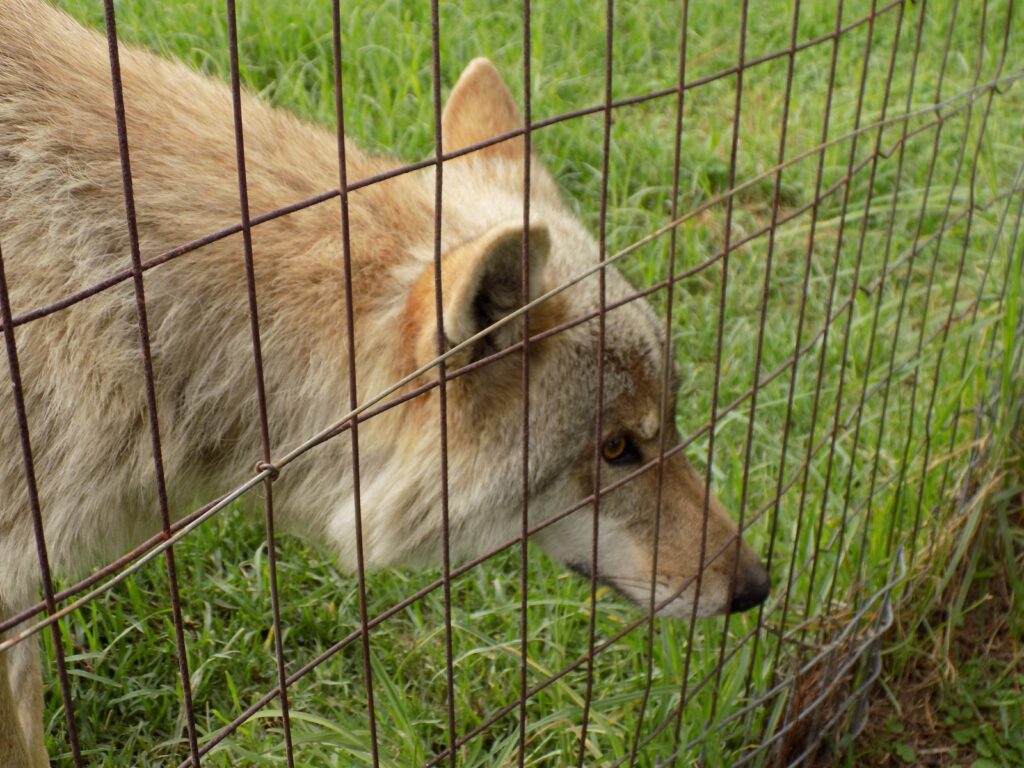
In a recent post we pulled back the curtain on how we feed our wolves: the meat, the freezer space, the daily physical work. This time we want to put real numbers to it, because when a sanctuary survives on donations, the people who support it deserve to know exactly what their money does.
What One Wolf Eats
A grey wolf at the sanctuary eats between three and five kilograms of raw red meat every second day. Wolves are built to eat in bursts rather than little and often, a pattern often called feast and famine. In the wild they may go a while without a meal, then eat a great deal at once when the pack makes a kill, so a substantial feed followed by a rest day suits them far better than a constant trickle of food. They are also true carnivores that do best on whole meat, including bone and organ, which is part of why donated carcasses are so valuable to us.
Feeding a Pack of Twenty
We currently care for around twenty wolves. At three to five kilograms each, every second day, that works out to roughly sixty to a hundred kilograms of meat per feed. A good portion comes from donated carcasses, which we are enormously grateful for, but even donated meat carries a cost. There is fuel to collect it, freezer space to store it, and the labour to portion and prepare it safely. Supply is never perfectly predictable either. Some weeks bring more than we can store, others very little, and the team has to plan carefully so the pack is never short. Nothing about feeding predators at this scale is free, even when the meat itself is a gift.
The Real Monthly Cost
Once everything is added together, it costs at least R3,000 to R5,000 per wolf per month to provide proper care. That figure is not only food. It includes parasite control, enclosure maintenance and veterinary fees, the full picture of keeping a large wild animal healthy and secure. Across the whole pack, that puts the sanctuary’s basic running cost somewhere between R60,000 and R100,000 every month, before a single unexpected vet bill or storm repair. Those surprises are not rare, which is why the real figure often runs higher.
More Than a Full Bowl
It is worth being clear that feeding a wolf well is about far more than putting meat in front of it. Parasite control is a constant, ongoing job, not a once-a-year task. Enclosures take steady wear and need repairing and reinforcing to stay secure. Sterilisation is part of running a responsible, non-breeding sanctuary, and it carries its own veterinary cost. And because these are large, powerful wild animals, even routine health care is more involved and more expensive than it would be for a domestic dog. Each of those lines sits inside that monthly figure, quietly, whether or not anyone is watching.
What Sponsorship Really Does
One of the most direct ways to help is to sponsor a wolf. Because we can put a real monthly figure against each animal, a sponsorship is not a vague donation into a general pot. It maps onto the genuine cost of keeping one specific wolf fed, treated and safe for a month, and it gives that animal a small circle of people invested in its wellbeing. For a self-funded sanctuary, predictable monthly support is worth even more than a one-off gift, because it lets us plan ahead, buy in sensible quantities, and weather the quieter months when donations slow down.
Where Your Support Goes
Wolves are an exotic species in South Africa, so the sanctuary receives no government funding. Every rand comes from donations, sponsorships and daily guided tours. When you sponsor a wolf, make a donation or book a visit, you are not giving to something abstract. You are covering a specific, unavoidable cost: the meat in the freezer, the vet on call, the fence that keeps the pack safe. If you would like to help carry that load, you can make a donation or adopt a wolf, or come and meet the pack in person on a guided tour.